
BRRRR Calculator

Contractor and investor reviewing a fixer-upper home for a BRRRR real estate strategy

This free BRRRR calculator helps you analyze real estate investment deals fast. Enter your purchase price, rehab costs, and refi terms to see whether a property pencils out before you commit capital.
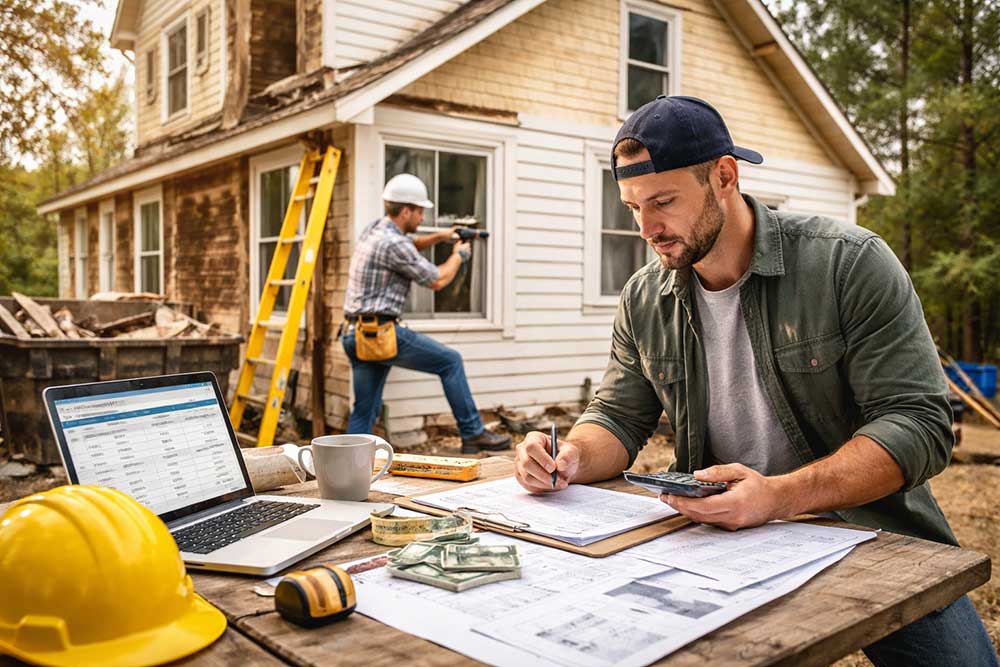
Real estate investor using a BRRRR calculator for deal analysis

BRRRR Calculator

Analyze the complete BRRRR strategy: Buy, Rehab, Rent, Refinance, Repeat. See if you can pull all your cash out.

🏠 STEP 1: BUY — Find a distressed property below market value
The price you're paying (or paid) for the property. For BRRRR to work, this should be significantly below the After Repair Value. A good target is 70% of ARV minus rehab costs.
All costs to close the purchase: title insurance, attorney fees, inspections, transfer taxes, lender fees if using a purchase loan. Typically 2-5% of purchase price. If paying cash, this is usually lower.
🔨 STEP 2: REHAB — Renovate to force appreciation
Your total renovation budget including materials, labor, permits, and contractor fees. Get contractor bids before purchasing. Focus on improvements that increase appraised value: kitchens, bathrooms, flooring, paint, curb appeal.
Add 10-20% buffer for unexpected costs—they almost always come up! Older homes or first-time flippers should use 15-20%. Experienced investors with detailed scopes can use 10%.
How long until the property is rent-ready? Be realistic—cosmetic rehabs take 1-2 months, moderate rehabs 3-4 months, major renovations 6+ months. Delays cost money in holding costs.
Monthly costs while the property is vacant during rehab: utilities ($150-300), insurance ($100-150), property taxes (annual Ă· 12), hard money loan payments if applicable. These add up fast!
The property's market value AFTER renovations are complete. Research comparable sales (comps) of similar renovated homes in the area. Be conservative—your refinance loan amount depends on this appraisal.
🔑 STEP 3: RENT — Place a tenant to generate income
What similar renovated properties rent for in the area. Check Zillow, Rentometer, or ask local property managers. The rent must support the new loan payment for refinancing to work (DSCR ≥ 1.0).
Check your county assessor's website for exact amounts. Note: taxes may increase after purchase or renovation! Leave blank to estimate at 1.2% of ARV.
Landlord/rental property insurance policy. Get quotes from multiple carriers. Typically $800-2,000/year depending on location and coverage. Leave blank to estimate at 0.5% of ARV.
Homeowners Association fees if applicable. Common for condos and townhomes. HOA fees reduce your DSCR and cash flow—factor them carefully.
🏦 STEP 4: REFINANCE — Pull your cash out with a DSCR loan
Loan-to-Value ratio for your refinance. DSCR lenders typically offer 70-80% LTV on cash-out refinances. Higher LTV = more cash back, but also higher payment and lower DSCR. 75% is standard.
Expected interest rate on your DSCR refinance loan. Rates vary by credit score, LTV, and DSCR. Check current rates with DSCR lenders. As of 2024-2025, typical rates are 7-9%.
Interest-only options give lower payments and higher DSCR, but you're not paying down principal. Good for maximizing cash flow; 30-year fixed builds equity faster.
Closing costs for the refinance loan: appraisal, title, origination fees, etc. Typically 2-4% of the new loan amount. These come out of your cash-back proceeds.
How long you must own the property before refinancing. Many DSCR lenders require 6 months seasoning to use the new appraised value. Some lenders offer 3-month or no-seasoning options at slightly higher rates.
Your credit score affects both your interest rate and maximum LTV. Higher scores qualify for better terms. Most DSCR lenders require 660+ minimum.

What Is the BRRRR Strategy?

BRRRR stands for Buy, Rehab, Rent, Refinance, Repeat. An investor purchases a distressed property below market value, renovates it, places a tenant, then pulls out capital through a new loan based on the higher appraisal. You recover most of your money while keeping the rental property.

Think of it as a fix and flip where you never sell. You recycle funds through a refi and hold the asset for rental income. One mistake I see repeatedly: skipping the cash flow check and focusing only on the refi.

How to Use This Calculator

The tool walks you through each phase so you can do fast property analysis.

Step 1: Buy

Enter the purchase price and closing costs. Many investors follow the 70% rule, buying at 70% of the after-repair value minus rehab spend. Some use a hard money loan to move faster.

Step 2: Rehab

Add your repair budget and carrying expenses. Renovation costs almost always run higher than expected. Build in a 10 to 15 percent buffer.

Step 3: Rent

Input monthly figures for income, taxes, insurance, and HOA fees. This step shows whether you can maintain a strong DSCR. Confirm numbers using real local comps.

Step 4: Refinance

Enter refi terms: rate, LTV, and lender fees. Some lenders require a seasoning period before recognizing the new appraisal. Compare scenarios with our DSCR refinance tool.

What the Results Tell You

  • Total Invested: purchase + closing + rehab + holding costs
  • Funds recovered at refi
  • Equity left in the property
  • DSCR, monthly income, and ROI

Export results into a spreadsheet for deeper deal analysis. Learn more about how DSCR works in real estate to evaluate the refi step accurately.

Tips for Successful Deals

  1. Buy right. Profit is made on the purchase, not the rehab.
  2. Verify the after-repair value using conservative comps.
  3. Keep contractor bids tight so renovation costs stay predictable.
  4. Talk to hard money lenders early.
  5. Confirm rental income using real local data.

Disciplined investors who run every scenario outperform those who rely on gut instinct. Use this BRRRR calculator to make decisions based on math. You can also try our Airbnb DSCR tool for short-term scenarios.

Frequently Asked Questions

What is the 70% rule?

Pay no more than 70% of the after-repair value minus renovation costs. It gives investors a quick way to screen deals and protect their down payment.

What are the biggest risks?

Cost overruns, overestimating value, weak tenant demand, and rising interest rates that reduce refi proceeds. Each risk affects whether you recover your funds or leave money trapped.

This page and the free tool are for educational purposes only. Always verify property details and consult qualified professionals before making real estate decisions.